

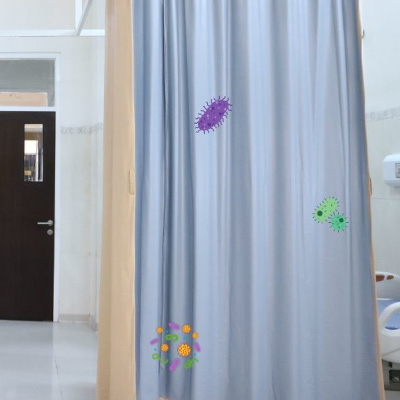

Textile innovation for healthcare and home safety

Reduces infections, prevents microbial resistance, and cuts environmental impact

Textile Health & Safety

Why fabrics are a critical vector in infection prevention

Contaminated uniforms

Fabrics are an underestimated vector of risk

  • Scientific evidence shows that microorganisms can persist on fabrics for weeks or months, maintaining their ability to transfer through direct or indirect contact.


making them a vector for the spread of infections

“Most bacterial species survived better at elevated air humidity.” (Kampf, 2020)

Contaminated textiles

Pathogen survival on fabrics

  • Polyester up to 206 days (E. coli, S. aureus, S. pyogenes)
  • Cotton up to 90 days (Enterococcus spp., VRE, S. aureus, E. coli ESBL)
  • Mixed fibers up to 90 days (VRE, E. coli ESBL, S. aureus)
High humidity increases survival and transfer

(Kampf 2020; Sattar 2001; Varshney 2020; Lopez 2013; Sizun 2000)

Reducing textile contamination means reducing the risk of infections

Scientific literature is clear: lower contamination on fabrics means greater protection against infections.
However, antibacterial fabrics based on biocides present significant limitations
— skin irritation, chemical release, and the risk of microbial resistance —
which call for safer and more sustainable solutions.


Respectlife textile performance

A Patented Technology

Zero chemicals. Zero lint. Zero compromises.

It is born from a continuous filament finer than a human hair, engineered to eliminate knots, roughness, and particle release. Its natural super-hydrophobicity creates a physical barrier against microbes and fungi without relying on chemical treatments.

Pure and Stable Fabrics: Safety and Durability

Thanks to exclusively mechanical processes, Respectlife produces fabrics with dimensional stability. Rigid or elastic solely through yarn engineering, ensuring 100% purity.

Clinical Validations

Antiviral, NON Microbial Colonization, Ethical Committee Approval (IRCCS San Matteo, 2023).
User Trial – Newcastle University (2020). Academic study Humanitas University (2023–2024).

Respectlife is a unique technology

combining pure raw materials, advanced mechanical engineering, and clinical validation to deliver superior protection.
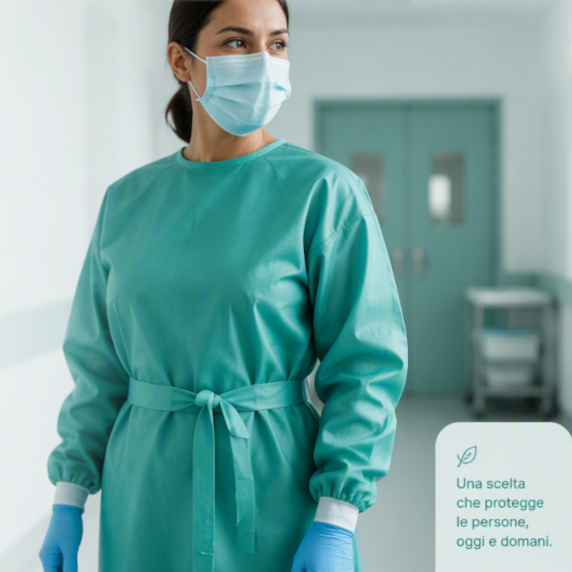
Essential Clinical Benefits

for Patient Safety and Hospital Efficiency.

01

Fewer infections, fewer hospitalization days

Reducing infections limits the use of antibiotics and the need for complex therapies, lowering hospitalization days and related costs.

02

Advanced Comfort & Skin Protection

Dries quickly, reducing the risk of skin maceration.
Minimal friction prevents rubbing-related injuries.

03

No Particulate Release

Does not disperse textile particles into the environment, potential carriers of bacteria, and prevents wound contamination.


04

Reduced Hospital Costs

Low-temperature washing (–80–87% energy), extended durability (200+ cycles), RFID traceability (–10–20% losses).


Environmental responsibility

Respectlife Reusable: More Safety, Lower Costs, Zero Waste

It overcomes the limits of traditional disposable textiles with an advanced technology validated in collaboration with Humanitas.

Direct economic savings:
Disposable products require continuous purchasing and generate disposal costs.

Respectlife reduces costs thanks to:
  • 200+ uses per garment
  • Washing at 30°C, no ironing
  • No harsh detergents
  • Recycling into new high-value raw material


Sustainability

Reducing infections without biocides

means reducing the use of antibiotics
and countering Antimicrobial Resistance.
A threat that WHO estimates could cause up to
10 million deaths per year by 2050.