almost zero water, dry coloration, long-lasting performance, and total recyclability.
Why sustainability in textiles is no longer optional
The fashion and textile sector is undergoing a profound transformation: European regulations, more aware consumers, and
new ESG standards are redefining the market.
Respectlife was created precisely to respond to this evolution
— safe, traceable, recyclable materials designed to reduce environmental impact —
throughout the entire life cycle.
Environmental Impact Comparison
Discover how Respectlife outperforms polyester and cotton in water consumption, CO2 emissions, and energy efficiency.
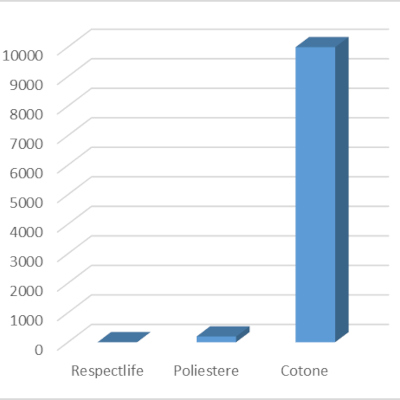
01 · Water for 1 kg of fiber
Respectlife: 0.6 L
Polyester: 200 L
Cotton: 10,000 L
Respectlife uses up to 16,000 times less water than cotton.
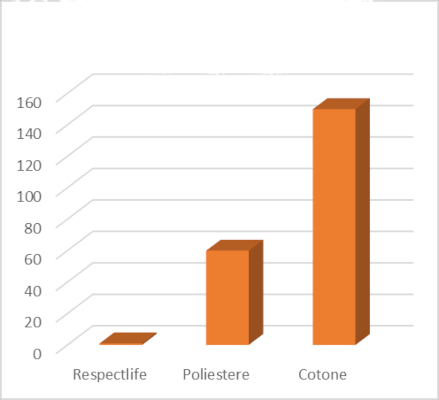
02 · Water for dyeing (1 kg)
Respectlife: 0 L (dry coloration)
Polyester: 25–60 L
Cotton: 150 L
100% reduction in dyeing water with RL.
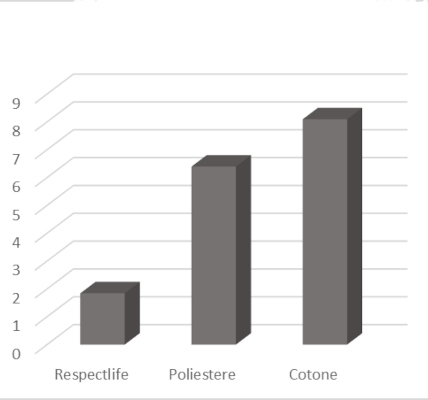
03 · CO2 emissions (GWP/kg)
Respectlife: 1.85 kg CO2
Polyester: 6.4 kg CO2
Cotton: 8.1 kg CO2
Up to 77% less CO2 compared to cotton.
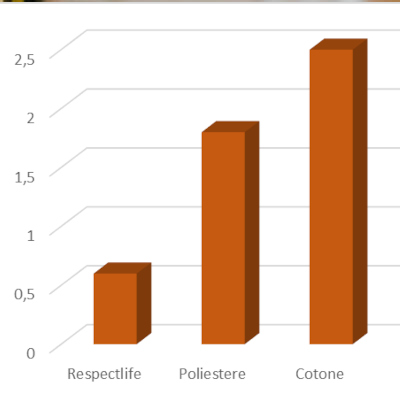
04 · Washing energy (kWh/kg)
Respectlife: 0.3–0.6 kWh/kg (30°C)
Polyester: 1.2–1.8 kWh/kg (60°C)
Cotton: 1.8–2.5 kWh/kg (75°C)
Around –80% energy per industrial cycle.
Total Circularity
Every Respectlife WaL® garment
never becomes waste,
it transforms, regenerates,
and returns as raw material.
100% Monomaterial Recycling
What does it become after recycling?
new textile fibers, containers and packaging, automotive components, regenerated pellets.
Energy Recovery (certified option)
When not destined for recycling, it can be used as a clean energy source,
recognized by the U.S. EPA as more sustainable than fossil fuels.
Hydrogen Production from Waste
PP is one of the most efficient materials for advanced pyrolysis processes that generate hydrogen.
EU-funded projects: €5.2 billion public + €7 billion private.
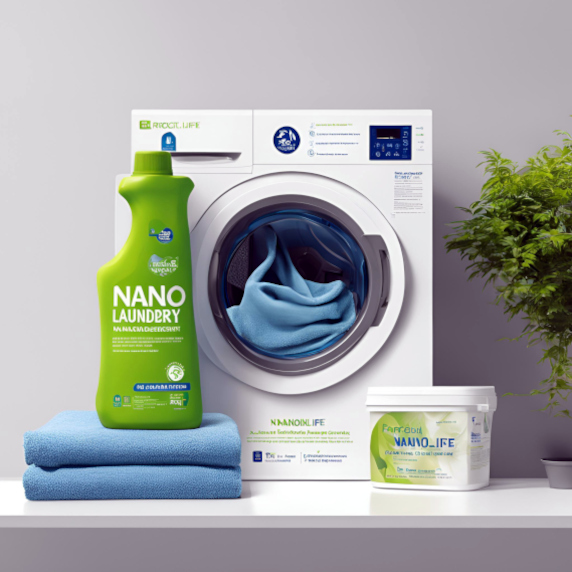
NanoLaundry Low-Impact Washing
The Respectlife detergent developed with NFTE nanoparticle technology
Zero Phosphates
Eliminates the risk of water eutrophication
Water-Based
Hydromiscible formula, free from solvents and persistent substances.
No Corrosive Agents
No aggressive chemicals: protects technical fabrics, seams, and RFID systems.
Active Nanoparticles
Maximum cleaning performance even at 30–40°C.
Minimal Environmental Impact
WGK 1 classification: the most sustainable category for industrial detergents.
Our performance in health, water management, circularity, and climate has been analyzed and validated by Cariplo Factory, confirming our active contribution to the UN Global Goals.
Fabrics that reduce infections, antibiotics, and healthcare costs
Fewer infections means fewer antibiotics, less AMR, and shorter hospital stays, generating significant savings for hospitals and healthcare systems.
Zero water, zero chemicals: the dyeing process of the future
0.6 liters of water per kg of production, 0 L/kg for dyeing.
No dye release: protecting water resources and ecosystems.
True circular economy: 100% recyclable, 200 life cycles
Eliminates textile waste, disposal costs, and dependence on virgin raw materials, enabling a circular and sustainable supply chain.
Reduced pollutant emissions and low-impact processes
Lower CO2 emissions.
Less energy, fewer emissions, more circularity: a concrete contribution to decarbonizing the textile sector.